Hello and welcome to Out of the Well! I am a teacher, parent, and human being interested in finding creative solutions to the myriad challenges that face us in modern society. I have been half-heartedly meaning to start this blog for years, and more recently had a false start where I ALMOST got going. Now that the world has STOPPED for a bit, I’ve been re-inspired. As difficult as this social distancing is in response to COVID-19, it brings me hope.
Hope that we can change.
Hope that we can learn.
Hope that we can re-imagine.
Hope that the connections we are building will open new possibilities.
Hope that the realizations we are having will help rebalance social inequities.
Hope that we can work together to make our world a healthier home for us all.
Be the change you want to see in the world, right? What changes do you want to see?
I was an elementary school teacher in Ontario for over 20 years. I recently resigned from my job, disillusioned by the lack of change in our system, even though we know better. I had been deep down a rabbit hole about the intersection of neurodiversity, parenting, education, and trauma. I had railed for years against a system that didn’t take into account the needs of different learners, or even seem to follow the pedagogy I had learned in my education degree, though I had done my best to run my classroom as inclusively and authentically as possible. But as I learned more about what we know from science and psychology, I realized that even knowing better, I was working in a system that would not allow me to put into practice what I knew was good for kids and learning. The true catalyst came in the form of a book called “Free to Learn,” by Peter Gray. It discusses parenting and education from prehistoric humans to the present, and it doesn’t paint a pretty picture of the current system. Then it offers alternatives that line up with what I had learned 20 years earlier, when I got my B.Ed. Those alternatives also lined up with what I was learning about neurodivergence and educational trauma. I realized I was no longer willing to be part of a system that I feel is failing kids and perpetuating many forms of marginalization.
This realization was a fairly sudden and violent shift in my perspective. I had been working up to it for a while, watching children struggle with expectations they couldn’t meet in school, watching teachers struggling to manage all their myriad responsibilities, as well as watching my own child recover from severe burnout, the light slowly coming back into his eyes the longer he was out of the system. But somehow, I was still unprepared for the intensity of feeling that followed reading “Free to Learn.” I decided I could not, in good conscience, continue. I thought perhaps I could start an alternative learning centre, an “Unschool,” if you will. But instead, we moved to Victoria, BC, partially in search of more progressive education. And we have not been disappointed. I have been so incredibly impressed with what I’ve seen of the education system here that I am contemplating a return to teaching.
People keep asking me what is so different out here. Why am I so impressed? What are they doing right? I can give examples, but I think it’s their overall approach to education. It’s like Ontario still believes that if you put kids in a classroom and tell them what they need to learn, they will learn it, while BC has figured out that learning is a relational activity, and one that has more to do with regulation and safety than just presenting information. The local system is more flexible, more child centred, and more aligned with current understandings of pedagogy, behaviour, and mental health. It’s like they want the system to work for kids, instead of the other way around. Here are a few things I noticed right off the bat:
My youngest started school right after we arrived last year. He quickly found a group of friends and his social integration was prioritized. Everyone seemed to recognize that safety and comfort had to come before academics.
In math, the teacher taught a lesson and then provided several worksheets, allowing students to select work at their “just right” level.
In language, they worked on an artistic portrayal of the novel they read in class, with kids participating in multiple activities and then having an afternoon Open House to show off their work to parents. The school supplied snacks and the kids hung out in groups or walked parents through at their leisure. No one policed behaviour, and there was very little, though they were noisy and unfocused. But it felt like a celebration and everyone seemed at ease.
Each term, middle school students have a “CC day,” with early dismissal for curriculum completion. These afternoons provide time for students with overdue or unsatisfactory school assignments to complete work before report cards are due. This provides motivation to get assignments in, as teachers have to sign off on students’ early dismissal, a quiet, non-punitive work space, and an opportunity for a bit of extra help for those who need just a small nudge. It also helps to ensure that teachers are working with all of the work a student CAN do, and not just what got handed in on time.
I coached volleyball for a season, which meant I was in the school one lunchtime a week and got to see students interact with a variety of staff. The environment was relaxed and friendly. Kids were in hats and hoodies. They were casual with their teachers and on a first name basis with the office staff.
Everyone just seemed happy. There also seemed to be less challenging behaviour. The more I see of schools here, the more I think I understand why.
There are no grades given. All the way to grade nine, reporting is based on a proficiency scale. Students are reported as emerging, developing, proficient, or extending. I think that language matters. It feels much better to have “emerging skills” than a D. “Proficient” feels better than a B
Apart from the core subjects, students participate in “exploratories.” These are courses like art, drama, woodworking, and home ec, where students aren’t graded at all. They are literally exploring to figure out their strengths and interests. They participate in four exploratories a year, in 8-week blocks. At the end of each block, the kids self-assess and the teacher signs off on their assessment. They comment on their progress, their interest, and their skills (like tidying up after themselves, following directions, exploring strategies, and taking risks).
The general culture of schools seems to include the understanding that kids do well when they can and that behaviour is communication. When kids struggle to fit the school environment, an effort is made to change the expectations or environment, rather than “fixing” the kid.
One of my favourite surprises came this fall, when my youngest returned to middle school. The very first day, students only went for one hour. Incoming students in grade 6 arrived first, and returning students (grade 7 & 8) came after. For the next three days, students were placed in grade groupings rather than classes. They spent the week engaged in team building, assessments, and fun activities. On Friday afternoon, students were placed in the classes they’ll be in for the rest of the year.
For kids with anxiety, this removes SO MUCH stress! They have a quick intro just to get back on the property and hopefully find a friend. They have a few days to meet and greet without the pressure of the whole year on top of them. They do all the team building with a group of same age kids and ENJOY their first few days of school, forging relationships with both students and staff. And on Friday, when they get their class placements, they go home to process with parents rather than having to manage alone all day. Everyone starts fresh on Monday, but hopefully with a successful week already under their belts.
For the school, this gives them time to see who actually arrives after the summer vacation, which students might need a bit more support this year, which kids should or shouldn’t be together, and maybe which staff will be a good fit for students. They get a few days to get back into the swing of school without any pressure to start academics. And when they get their permanent classes, they can continue the “Get-to-know-you” period, because they’ve only lost three days, rather than the three weeks I was accustomed to losing in Ontario.
In elementary school, they have a similar system, where students go to last year’s class for the first week, thereby reducing anxiety and forming classes based on actual attendance. They transition on Friday afternoon too. I think it’s brilliant, and also not that hard to do.
My other son started high school, and I am even more impressed by what I’ve seen there. He describes it this way: “I need to survive the school system. I feel like my teachers are there to help me do that, rather than me trying to survive their classes.” It feels like a team. Students’ needs are prioritized. There is incredible flexibility. My son started back after a three-year hiatus. No one asked about missing pre-requisites or insisted on age-appropriate placements. They just put him in and said they’d support him where he needed it. The district principal gave matter-of-fact information and asked my son what he wanted and needed to be successful. They centred his voice and gave him agency in his decision of what school and program would best suit his needs. He took the advice offered to start at a smaller school, but decided he preferred the regular program to special education support. No one questioned his decision or tried to talk him into a different choice. It was refreshing and inspiring and highly empowering.
Because it’s small, all of the electives at his school are multi-grade, so everyone who takes art, or robotics, or any other elective, is in the same class. Each elective class has a mix of kids from grade 9-12. This means there can be no lectures that are aimed at just one grade level. The kids work on projects and teach each other, with the teacher as resource and guide. Kids come and go from classes as they are ready, taking breaks when they need to. Fridays are shortened to make time for learning support. After school clubs, like drama, theatre crew, and outdoor ed are credit courses. My son is in theatre crew. He stays after school one day a week to help build sets as part of a team. More experienced students run groups under the supervision of the theatre teacher. They are learning skills on the fly and getting academic credit for doing so. This is real-world learning and shows respect for students’ free time and interests.
And then… I became an EA (educational assistant).
I’ve only been on the job for two weeks, so there’s still lots to learn. But I am so incredibly impressed by my first nine days. I’ve worked everywhere from kindergarten to high school, in fancy neighbourhoods and what I would consider “inner city” schools. Here are a few highlights from my experience:
One school has 28 EAs, all of whom wear walkie-talkies. They are short staffed every day and work together as a team in a way I’ve never seen before. Many work 1:1 with high need kids or in classrooms with multiple high need students. They work to help kids access their best education, with an understanding that the secret is to change expectations rather than changing kids.
It is not unusual to see kids out walking alone in the halls. At least one grade one classroom had three passes on the wall – one for the washroom, one for the office, and one for “I’m taking a walk.”
Many elementary schools have stationary bikes or small trampolines in the hallway. Kids are encouraged to take a minute or two of exercise when they need a regulation break.
Every elementary school I’ve been in has at least one sensory room. At one school, my job included taking two different kids for “scheduled sensory breaks” in a room filled with heavy work materials, like a small trampoline, heavy balls, a tunnel, and a crash mat. They got five minutes of free independent play before returning to class. This is a PREVENTETIVE measure designed to avoid dysregulation.
I have never seen a child punished or shamed for misbehaviour. They are prompted, supported, and redirected, with the understanding that all people make mistakes, especially when learning.
At one school, all of the teachers went by first names. Kids ate when they were hungry and were encouraged to take a drink if they were struggling to pay attention. When a child had a meltdown and stormed out of the room, he was left to regulate himself in the hallway, without being followed. He took the time he needed and returned to class ready to continue.
On the door of one classroom, there was a sheet with “Useful Phrases” that both started and ended with, “We give lots of chances.”
Schools routinely have fruit available.
Classrooms and libraries routinely have headphones available.
It is common to have more than one adult in any given room.
There is a strong focus on Indigenous wisdom and reconciliatory practices.
Most classrooms I’ve been in have a variety of seating, including beanbag chairs, sofas, rockers, and wobble chairs.
Most elementary classrooms, even up to grade three or higher, have free choice activity time on a regular basis, where kids naturally learn through play.
All elementary education is inclusive. Kids with a range of special needs, both physical and cognitive, are included and supported within regular classrooms.
High school education is also inclusive, with students attending regular classes as much as possible, with a great deal of EA support.
It isn’t perfect. It’s public education. There is never enough money or staff to do what’s needed. Kids have needs that can be hard to meet within an institutional setting. Not all staff are on board, and some are struggling to shift from an old-school mindset. But the idea that kids need space to make mistakes, even big ones, is both refreshing and inspiring. Treating kids with respect, autonomy, and trust seems to create an environment that supports positive interactions, self-esteem, and learning. There is less anger and frustration, more acceptance of individual difference, and a more co-operative atmosphere. Overall, I am so glad that I’ve had the opportunity to see a better learning model in action. I might just try my hand at teaching again!
**Disclaimer: I am aware that my experience is not universal. I have delayed posting this because I am aware that there are people here in BC who are struggling to find support for their kids, and I don’t want to speak over their very real concerns. But I also believe it is important to celebrate what is going right and share it with the hope of inspiring positive change.**
One year ago yesterday my twelve-year-old son and I packed up and climbed into our red SUV to set off on a cross-country adventure. Meanwhile, my husband and fifteen-year-old son boarded a plane for Victoria, BC, where we would meet them one week later. We left our family home – the place we had been married, had kids, and lived for 18 years – with a FOR SALE sign in the yard.
Our driving adventure took us through Sudbury, Thunder Bay, Winnipeg, Regina, Calgary, and Vernon, with stops along the way at Science North, the Terry Fox Memorial, Kakabeka Falls, Dinosaur Provincial Park, and Banff. It was a beautifully scenic drive, with the brightly coloured leaves of autumn, the golden fields of the prairies, the other-worldly badlands, and the majestic Rocky Mountains. I already knew that Canada is a huge country, but knowing that cognitively and actually driving it are very different things. Our journey gave me a new understanding of the word remote – and we weren’t even particularly off the beaten path. There were long stretches of road where I couldn’t make a phone call (no cell service), listen to a podcast (no data service), or even listen to the radio (AM or FM). I hadn’t known there were parts of Canada that don’t even get CBC. Signs indicated when there was limited fuel ahead, and at one point we passed a sign that read, “From here, all streams run north to the Arctic Ocean.” That was pretty cool. We stayed in basement Airbnbs for the first couple of nights, then cheap hotels, and then we were lucky enough to stay with friends and family, with lovely visits to get us through the last few days of travel. Unfortunate timing had us travel a good part of the Rockies in the dark, which was harrowing, but definitely worth it for the visits. On the last day, we left Vernon in the dark and drove away from the rising sun, through smoke from nearby fires, to make the 1:00 ferry from Tsawassan to Vancouver Island. I cried when we arrived at the dock. Exhaustion, anxiety, and relief mingled to make the tears spill out while we waited to board the ferry to take us to our new home.
We arrived in Victoria in time to meet the other half of our family before selling our house that night from 5000 km away! It was time to find a new home. We spent the next several days viewing over half a dozen houses each day. My husband would roll out of bed at 5am and join a remote work meeting from the desk next to our bed. He would work until about 1:30 pm, at which point we would head out on our house hunting expedition, under the amazing and patient guidance of Tammy Gray, Agent Extraordinaire! With one near miss, quite a few tears, and lots of ground covered, we finally found a house we thought would suit our family and put in an offer. Soon we had a new home!
Twelve days after we arrived in Victoria, we flew home, leaving the car behind, so as not to have to drive it across Canada in the winter. We spent the next month sorting, purging, and packing up our lives, saying goodbye to the only home our family had ever known. Two weeks before our house closed, we all caught COVID, which forced us to cancel many of our goodbye plans and seriously derailed our packing progress. On Moving Day, we found drawers that had been missed, a microwave still in its cupboard, and a freezer full of food! My parents came to help and took the boys off to my brother’s family home, where we would spend our last night in Toronto. Our wonderful neighbours came to help clean and see us off, with love and care, and so manytears. The next day, we boarded a plane to our future.
And here we are. Victoria has been all we had hoped and more. It is breathtakingly beautiful, with a forest hike eight minutes walk from home that leads to the top of a small mountain. This view is a forty minute walk from our front door. It’s an eight-minute drive to the ocean, and no more than fifteen minutes drive to pretty much everything.
We left on December 6, but we had to wait for our stuff to arrive. I tried to get Christmas ready while we waited to move in on December 18th. Imagine my surprise that, even in the weeks leading up to Christmas, I could get parking, that the malls were clean and quiet, and that store employees were enthusiastic about helping me.
We moved in on a Saturday, and on Tuesday were buried under two feet of snow, which is a lot, even for Toronto standards, and a whole lot for a place that “doesn’t get snow.” We were in the midst of unpacking the essentials, and snow boots, snowpants, and mittens weren’t in the “OPEN ME FIRST” boxes! We dug through the garage and found what was needed, and went out to shovel snow, which was a great opportunity to meet our new neighbours. The entire city shut down for days, and we were never plowed – we just waited for it to melt. We even had a bit of white for Christmas. But by New Year’s Eve, we hiked up Mount Doug and saw how we are living next to a temperate rain forest.
We had a lovely Christmas and New Year’s Eve with my godparents and their kids, and began to settle in at our new house. I coached volleyball and joined a choir, my husband joined a DnD group, my youngest quickly found a group of friends to hang out with, and my oldest took a membership at the Victoria Bug Zoo and settled in to a comfortable routine. It was consistently warm enough to go out without winter wear and we walked every day. I missed the bright blue skies of Ontario winters, but not the frigid temperatures that go with them.
And then, it was spring. I had never understood Groundhog Day, that promised an early spring or six more weeks of winter. In my experience, six was a short estimate for the remaining weeks of winter. But here, by mid February, we were counting blossoms and marvelling at plants I would expect to see on a Caribbean vacation. We even have a palm tree out our back window!
Spring seemed eternal, with cherry blossoms and new growth for MONTHS. We even slept out in the yard without a tent – no bugs! We had visitors come and stay in my first ever guest room, and we began to get to know both Downtown Victoria and our local community. It was fun to share our new favourite haunts with friends who had come all that way to see us!
In the early summer, our younger son’s best friend came to visit, with his mom, who’s a good friend of mine, and we spent eight days visiting, travelling, and doing all things tourist. We travelled up the coast as far as Campbell River and saw what it would have taken us years to see on our own. This island is so unbelievably gorgeous!
After saying goodbye to our friends, the two of us headed over to China Beach for a night to join more friends from Ontario on their epic camping trip. We enjoyed the beach, the woods, and the company. Sadly, we couldn’t stay longer, because we were about to hop on a plane for a month in Ontario.
We left our puppy dog with my parents and spent our first day in Toronto with another mother-son friend pair, who fit us in before leaving for their own trip to BC. Then my son headed off to overnight camp, which had been a promised part of the moving transition. I spent the week in Toronto, staying with my parents and feeling like a teenager, borrowing my dad’s car and sneaking in late at night, trying not to wake anyone. It was a fabulous week of visits with so many people I hadn’t seen in a long time.
After a few days at the cottage and a few more visits, my husband and older son joined us in Toronto for the second half of our trip. We traveled to the cottage to spend a wonderful Family Weekend, with my parents and my brother’s family, before heading off for our yearly trip to Family Camp at Wanakita. As usual, Wanakita was wonderful, and it was lovely to connect with friends old and new in a relaxed outdoor setting. The kids run like a pack of wild dogs and gorge themselves on unstructured peer engagement and it is lovely to witness. Even my older son, who has been out of school for three years and rarely leaves the house, was fully engaged in the social scene. The kids swim, play volleyball, and wander around finding ways to enjoy their time together, while the parents relax, go to camp-style programs, and catch up with old friends. It is always a great week!
At the end of Family Camp, my older son declared that he was ready to go back to school. The week had been such a resounding social success that he wanted more. He decided that he wanted a high school diploma and to have a more typical teenage lifestyle. He was ready to leave his comfy cocoon and face the world.
After camp, we had a few days left of squeezing in all the visits we could. We even went back to see the old house, where we were invited for dessert by the new owners who are taking good care of our old home. Later that week, we packed up the whole family (including puppy dog) and returned to Victoria to see what would be next. It was so lovely to spend time with family, friends, old neighbours, and colleagues. Our cups had been filled by all of our visits, but we were also all ready to come back to our new home.
I reached out to the Victoria School Board to see how we could support a return to school. My son is of an age to go into grade 11, but has had no formal schooling since mid grade seven. He wanted to start in grade ten, since a diploma here consists of courses from ten to twelve. No problem. My next blog post will be about how impressed I am by the school system here, but suffice to say that he has had a warm and supportive welcome to high school and that enrolling him was an easy and well-supported process. He had taken up piano at camp and spent the next few weeks teaching himself to play while he waited for school to start.
Meanwhile, our younger son picked up right where he’d left off, having regular sleepovers and lots of hang outs with his new friends. My husband and I were introduced to Blood on the Clocktower, a fascinating role play murder mystery game, and are in the process of joining a board game club. In the last weeks of summer, we travelled back up the coast to show my husband and older son some of the things we’d seen earlier in the summer. Apart from everyone being sick on and off, it was a lovely, low-key end to a wonderful summer.
Both boys started school after Labour Day. It has been a positive start to school, and they are both in the swing of things now. I’m working on getting my teaching certificate transferred to BC. Because my husband is working remotely and following Ontario hours, he starts work at the crack of dawn and is done before 2pm every day. That gives us time to hike, run errands, play board games, and otherwise enjoy our afternoons. If he takes a half day, he is done by 9am. He feels like he is “cheating at life.” We are genuinely happier than we’ve been in years. The pace of life is truly calmer out here, with more work-life balance and a laid-back style to most everything.
Except the ferry. That’s not laid back. When they say a half hour before, they mean it. But I’ll leave that for another post…
This last year truly has changed everything. We took a risk that at times seemed almost crazy, but it has made such a positive difference in our lives. We were lucky, for sure, but we also worked hard for these gains. For those on the brink of a big decision, have faith! Those risks can be worth it. If you were not constrained by fear, or by what should be, what risks might you take and what might you gain?
Yesterday, along with millions of other Canadian parents, I sent my children back to school. I got a little teary. Honestly, it was a bit like kindergarten all over again. I sent them off believing they are ready, desperately hoping for good-fit teachers, and worrying about what MIGHT happen. I was looking forward to some peace and quiet, while already missing the time we’ve had together. But also, this year meant so much more than just the usual “back-to-school” excitement and anxiety that most families experience. This waving goodbye has been years in the making.
For one child in particular, this IS a bit like kindergarten. He’s been home for over three years. No school. No sports. Not much of anything, really. Not homeschooled, but unschooled. Just living his life. We have spent the last four years focused on connection and acceptance. We have given him space to figure out who he is, what he needs, and what he wants for his life. We have let HIM lead. It was scary, and unorthodox, and way outside of our comfort zone. But we could see that what we had been doing wasn’t working and we were ready to try something new.
Initially, we backed off out of desperation. We were in crisis, and we embraced the concept of “First, do no harm.” We needed space to regroup, to let his nervous system settle, and to rebuild a functioning family dynamic. We followed intuition and what I knew from an undergraduate honours thesis in Attachment Theory. We lowered demands and basically went back to infancy.
Let him sleep when he’s tired.
Feed him when he’s hungry.
Help him maintain a comfortable temperature.
Offer kindness and compassion and try to figure out what he needs when dysregulated.
Meet whatever needs we can.
Try to see the world through his eyes.
It turns out we are much better at this when our children are babies. I’m not sure why we lose the ability or willingness to take that perspective, but at some point, around the time our kids develop speech, we shift to expecting them to see the world from OUR perspective, instead of seeing it from theirs. Experts, teachers, family, friends, even well-meaning strangers encourage us to hold strong when our kids are struggling. We are told if we are consistent, they’ll come around. But firm, consistent boundaries had landed us in a pit, and we needed to go back and retrace our steps to see where we’d gone wrong.
It was hard work going back and having to put ourselves in his shoes. Our perception is that kids have good lives. They don’t have to work, or pay taxes, or have responsibilities, or serious worries. They get to play and go to activities that WE have to pay for and supervise and drive back and forth from. But as it turns out, that’s not really true. I mean, lots of kids have good lives, sure, just like many of us have good lives too. But they DO have to work… they just don’t get paid. They DO have responsibilities… just none that they chose. They DO worry – often because they have so little control over their lives. So much happens around kids that they don’t understand or aren’t consulted on. Meanwhile, they are expected to see the world from our perspective, do jobs that don’t feel important to them, and show gratitude for the activities that they do, even when they don’t feel like doing them. They are labeled as ungrateful, or lazy, or oppositional when they express an inability to do all the things they are expected to do, particularly if their expression isn’t tied up in a polite box with a pretty bow on top. Indeed for kids that really struggle, often the expression of their difficulty is rude, or inappropriate, or even violent, which just increases the tension between them and their caregivers.
It was hard to hear how much our child felt unheard and misunderstood. How he WANTED to be able to do the things everyone else could. How much shame and disappointment he carried. It was hard to learn that all of our efforts to help him learn and grow had made him feel rejected and unloved. That he had internalized the message, “If only you were more _____,” and believed himself to be broken and unworthy. Those were heart breaking messages. But we heard them, and we learned to do better.
We backed off and stopped asking him to do chores, cheerfully delivered food even when he was demanding and impolite, left him alone when he asked us to, and agreed to let him stop taking his medications. We held only one expectation – that we do a family activity together each day. We wanted him to know that we held connection above all other values. That he could choose not to shower, to eat by himself, to stay up half the night, but he could not choose to be excluded. He would always be part of our family.
Almost immediately, an incredible thing happened. Within days, his anger faded. Within weeks he started asking politely for things, thanking us for our care, and participating (mostly) willingly in daily family activity. It was an amazing shift. Where there had been conflict and anger, there was suddenly space to build positive relationships.
Over time, he shifted his waking hours later and spent an increasing amount of time on screens. It was hard to stand by and let this happen, but we were seeing such positive shifts in his demeanour that we held the course. I started researching alternative parenting styles, neurodivergence, and trauma, and eventually found resources that supported what we were doing.
In March of his grade 7 year, we pulled him out of school for a month. We hoped that fourteen school days (the maximum allowed without losing his spot in the gifted program) tacked on to Spring Break would give him time to figure out who he was when he wasn’t working so hard to fight the system. Then COVID happened, and no one went back after Spring Break. He took that spring off school completely. The next year, we attempted homeschooling, but it put pressure back on our fledgling relationship. Then I discovered the concept of unschooling, and we were off!
For three years, I have worked on my own understanding of how kids learn and thrive. As a seasoned teacher, it was eye-opening to be reminded that our system does not support what we know to be true about learning. Last spring I resigned from teaching, too disillusioned to continue to participate in a system I fear is hurting our children and our future. I discovered self-determination theory, and the concept that children need connection, autonomy, and competence.
As parents, we have steeled ourselves against the judgment of others, built community with those who understand our choices, and reveled in the seclusion that COVID brought. We worried about neglect, and the injustice of having one child in school and one out. We tried to balance the very different needs of our children, while embracing what we feel to be true for all kids – that self-determination is a powerful motivator. That kids do well when they can. That sticks and carrots are not necessary or helpful tools and that imposed consequences are highly overrated, if not downright dangerous. We re-imagined what COULD happen, instead of what “should.”
We watched our child struggle, mostly with his own internal demons, some of which we had helped put there. We loved him unconditionally and talked openly about different neurotypes, the randomness we were discovering in societal norms and expectations, and alternative paths to success. We stopped using consequences with both of our children, rather letting natural consequences play out and helping them navigate life on their own terms.
The more we got out of his way, the more he picked up of his own volition. Showering, oral care, fashion awareness, psychology, eating habits, and exercise – these all appeared on his radar. He picked up reading for pleasure and began to occasionally choose that over gaming. As he started to feel safer, he stopped avoiding life and his brain came back online. He resumed old passions and picked up new interests. His screen use became more and more multi-disciplinary and he would bring us videos and articles of interest on wide-ranging, mature topics. He began to be more flexible, and more open to new experiences. He even picked up a regular household chore.
And then, quite suddenly, he announced he was ready to go back to school. We went to Family Camp this summer, and he enjoyed his peer relationships so much that he determined he was ready for more. He was ready to try high school. I thought he might waver as the first day approached, but he was determined. His camp friends had started him on piano and he ran with that as distraction, using YouTube to teach himself while he waited anxiously for the start of school. He agreed to go out and buy supplies, went to appointments and tours, and picked out courses of interest. He practised his route to school and packed a school bag. He was nervous, for sure, but he went.
I waved goodbye as he careened out the driveway on his bicycle, a bit teary, but hoping for the best. Knowing that even if things don’t work out, this is a huge step forward, and trusting that, should we need it, we have the skills and confidence to find a new better-fit route for his future.
Wow – it’s been a while! I’ve been mired in mental and emotional stuff lately, with so many ideas competing for space in my brain that I can’t seem to get any out. They’re all related and complex, and they keep getting tangled when I try to pull a thread. But the recent incident between Chris Rock and Will Smith is an unrelated stand-alone incident that stirred up a strong reaction for me, so it seems like a good place to get started again.
For anyone who hasn’t heard about the incident, here’s the synopsis. At this year’s Oscars, on live TV, Chris Rock made a joke towards Jada Pinkett Smith, referencing her close-cropped hair which is the result of a skin condition known as alopecia. The entire room erupted in laughter. Jada’s face however, showed that the remark had landed badly, and her husband, Will Smith, strode up to Chris Rock and slapped him across the face. He then returned to his seat and made a loud angry comment, “Keep my wife’s name out your fucking mouth,” which he repeated twice, until Chris Rock said, “I’m going to, okay?”
To give Chris credit, he handled the incident amazingly well, keeping his composure and visibly restraining himself from making any further jokes about the incident. Apparently Will Smith was asked to leave the event, but declined, and shortly thereafter he won the Best Actor award for his role in King Richard. During his acceptance speech, he apologized to the crowd and the Academy, but noticeably not to Chris Rock, though he has since issued an apology to his colleague. He later resigned from the Academy and has since been banned from attending any Academy events for ten years.
The singular focus of this fallout concerns me.
I am not suggesting that slapping someone in the face is acceptable. I am not suggesting that violence is the answer to anything. However, I do feel like we’ve missed an opportunity. We have narrowed the incident to a single moment of physical altercation, removing all of the context around that unfortunate reaction. I feel like we’ve missed an opportunity for an important conversation around verbal assault, humour, and standing up for the underdog.
Let me start by saying that Will Smith should not have slapped Chris Rock in the face. I do not think he handled the situation well. But the fact we’ve overlooked is that he handled it. He took a stand and went to bat.
As a public school teacher, I have spent years teaching kids about the power of bystanders. About the pain that words can deliver. About the importance of standing up for someone who is being picked on and calling people out on inappropriate behaviour. Will Smith demonstrated the very values we are trying to instill in children. It was undeniably a clumsy and misguided attempt, but I feel he is being singled out as the only problem in this situation. No one is making space for him as the “upstanding” onlooker that he was or pointing fingers at Chris Rock who took aim at Jada in the first place.
Granted, it would have been more appropriate for Smith to have refrained from physical assault in the process of standing up for his wife. It would have been much more appropriate to stand up and explain why Chris Rock’s words were over the line, what the impact was on his wife, and how all those who laughed, including himself, were lining themselves up with the bully. But most of us do not have access to that level of composure in high stakes settings. Most of us don’t know what to do, which is often why we laugh, even when we feel the joke is not really funny. Too many of us ignore the discomfort of the victim and reward the bully with our laughter and attention. When we focus solely on Will Smith, what we are saying is that it was okay for Rock to take a cheap shot at Jada, with no regard for her feelings or the feelings of others who might be struggling with hair loss for any number of reasons.
Many actors and other public figures have been quick to condemn Will Smith’s actions. Academy executives released a letter in response to the incident. In it, they write, “This was an opportunity for us to set an example for our guests, viewers and our Academy family around the world, and we fell short — unprepared for the unprecedented.”
What they failed to point out is that they were woefully unprepared to set a positive example more globally, namely around the expected. Chris Rock delivered an off-colour joke at someone’s expense, and that was considered acceptable, because it was expected. As a society we seem to have implicitly agreed that it is okay to make fun of someone’s medical condition, sexual orientation, mental health status etc, IF it’s delivered as part of a publicly sanctioned event.
Please note that if the same event occurred in my classroom, I would be expected to shut it down, explain to all involved why it was not funny, and attend to the victim of the joke to be sure that they were supported in processing what had just happened. How are children, or adults for that matter, supposed to understand the difference between that and what happened at the Oscars? Why is it okay for Chris Rock to make cruel, rude, and directed comments, but not for the rest of us?
Then, when someone did not sit back and take it, but instead stood up to defend his wife, he has been vilified and harshly punished, taking all of the blame for the incident on his shoulders alone. How many of us have wished after the fact that we had responded differently in the moment when we saw someone being mistreated? How many of us have wished that someone stood up to protect us in a moment of victimization? How many of us have been triggered by an event and responded in a way we later regretted?
Emmanuel Acho explains why it is even more understandable that Will Smith reacted as he did. He points out that, in his recent autobiography, Will Smith states that much of his life has been defined by guilt over his inability to protect his mother from verbal and physical assault at the hands of his father. Now, he finds himself in a heated, tense situation, where emotions are running high for all involved. Chris Rock makes a joke and he sees the pained look on his wife’s face and is overcome by an impulse to defend her. Acho maintains that the violent nature of Will’s response is inexcusable, but he demonstrates a compassionate understanding of the forces at play for Smith. I see little of that compassion or understanding in most of the reactions following this event. Very few people are taking this opportunity to talk about trauma responses, or the impact of domestic violence on children. No one seems to be asking why we don’t care about microaggressions and unkind humour, or talking about the courage it takes to walk around in the world with all kinds of visible and invisible differences.
I maintain that verbal aggression is often the precursor to physical violence, and that both are caused by a lack of empathy and compassion. How can we model compassion, take the opportunities that arise to talk openly about difficult topics, and choose the kind of society we want to build for our children?
In the most recent wave of the pandemic, the Omicron variant has resulted in seven days of virtual learning for Ontario students. Schools were closed to students for the first two days following the winter break and then opened to virtual learning at the last moment, leaving parents scrambling to find child-care or to support their children’s at-home learning.
Despite the fact that nothing has changed medically, students will be going back to school on Monday the 17th. As far as I can tell, this is a politically motivated move, because parents are fed up with having their kids home. The cynic in me thinks that it’s a calculated risk, with a high likelihood of closing schools again in the first week or two, when the healthcare strain and/or staffing shortages force us back online.
I understand the parental frustration – we are in an untenable position. Families are not designed to function this way. It is unsustainable to expect parents to work full time and also support children’s learning six hours a day. It is not reasonable to expect children to spend 225 minutes a day sitting in front of a screen, trying to learn without the usual benefits of in-person school.
That said, I find the anxiety around school closures frustrating, mainly because I find the arguments being made make no sense. I understand the economic need for children to be in school. Their parents need to work. For those parents who work outside the home, whether it be in healthcare, transportation, retail or other fields, childcare is non-negotiable. Staying home means losing income or job security. Something MUST be done to help these families weather the pandemic. These are often families who struggled even before the pandemic hit and it needs to be a priority to address their needs more wholistically.
But that is not the argument we keep hearing. The voices we are hearing are mostly from wealthier, more privileged families. These are parents who are working from home and struggling to perform their work duties while keeping their children focused on virtual school. They are people who feel their children are ‘falling behind.’ There is an outcry over the deteriorating state of children’s mental health.
The struggle to work and provide online school support is real. It is unreasonable and completely unsustainable. The expectation that parents would be able to perform both of these tasks is ridiculous and causing immeasurable stress on families in almost all situations. This letter, written by a private school principal, urging parents not to stress about the completion of school work, demonstrates the epitome of compassionate leadership. THIS should be the message we are sending families. We are living through a global emergency, the likes of which have not been seen in our generation, but somehow we have bought into the belief that things should carry on as usual.
The concern about children falling behind is ludicrous. Falling behind whom? We are ALL struggling, some more than others. Everyone’s learning has been disrupted. Everyone’s mental health has been challenged. We are in this TOGETHER, but we are still focused on competition and getting ahead. It also makes some bold assumptions about what actually happens in school, founded on very faulty beliefs about how children learn. I think one good thing that has come out of the pandemic is a heightened awareness for many parents of how broken the system really is. More on this later.
I am as concerned about the deteriorating state of children’s mental health as anyone. However, I am firmly unconvinced that the closure of schools is the catalyst for this. If being out of school were such a strain on children’s mental health, then we would see a spike in mental health issues and suicidality every summer. On the contrary, children’s mental health is usually at its best during the months that school is closed. Furthermore, children with mental health challenges often report that school is one of the major contributors to their struggle. Because of my family situation, I connect with many parents of neurodivergent children. Some of them are struggling more during this pandemic, but many are actually thriving. Being removed from the overstimulation, competition, and social frustration of school has been GOOD for them. Many parents have also embraced home schooling, or even unschooling, finding that their kids manage better with a more natural learning environment.
I contest that the decline in children’s mental health stems less from school closures and more from how we, as a society, are handling those closures. Imagine if we all said to our kids, ”Wow, how exciting! We get January to spend time in our jammies, play or go for walks outside, paint at the kitchen table, and get some extra screen time while Mommy and Daddy get some work done! What project would you do if there was nothing you HAD to do? What do you love and how can we get more of THAT?” Kids mental health would likely IMPROVE. Not possible for all families, I know, but our response is why they’re struggling. If we did more to support parents, I suspect we’d see a change.
The obvious piece that we are missing is that children are living through a global emergency, with parents and siblings who are also living through a global emergency, in a society that is living through a global emergency. There is trauma in that, with or without schools. Individual and collective trauma has been mostly ignored, mainly because of the requirement that we continue on as normally as possible. There hasn’t been space to process what is happening. There is an expectation that people will take on superhuman characteristics to keep all the balls in the air, despite obvious difficulties doing so. People have been asked to pivot to working from home, with a huge learning curve on technology. We’ve been asked to redesign the way we work, with neither warning nor infrastructure. On top of that, we’ve been asked to support our children’s learning, even while their teachers literally relearn how to do their jobs. There have been shortages of basic necessities, public upheaval, and regular news reports of death rates and infection rates daily for two years. People have been encouraged to fear others, to avoid friends and family, and to wear increasing levels of personal protective equipment for basic trips outside their homes. There are no sports, no destinations, and few opportunities to get away from those with whom we cohabitate. We have lived through lock downs, cancelled celebrations, and government advice that changes week to week, if not day to day. How is it possible that, in all of this, we are pinning children’s dysregulation on being out of school? Really? What magic elixir do you think we give out at school?
We are also missing the obvious stressor kids might feel about returning to school in the middle of a pandemic. While school may bring a modicum of normalcy to kids’ lives, it is a constant reminder of the dangers we are all facing. Wearing masks, heightened protocols, limited contact, no music – this is not school as usual. For kids with anxiety, or those who listen to the adults around them, the idea of going back into a potentially dangerous situation can be incredibly stressful.
But tonight took the cake.
Last month, the TDSB announced that during COVID, on days when inclement weather causes the cancellation of school buses, schools would be closed, because running schools during inclement weather often requires the mixing of cohorts. This news was generally well received by both students and teachers. This was exciting news, as usually the TDSB does NOT close schools, and teachers and students must find a way to get into school, rather than having the opportunity we all remember from childhood of “Snow Day!”
For several days now, we have been hearing reports of a winter storm on the way and a severe weather warning has been issued for our district. Tonight, just before 7pm, the school board sent out a message saying that in the event of inclement weather tomorrow, they would be reversing this new policy in favour of virtual learning tomorrow. At 7pm. On a Sunday night. Parents have already promised their children a snow day. Families have made plans to go sledding, build snow families, make forts, and have snowball fights. We’ve finally been given permission to have a relaxed day. Teachers have packed up their computers, made a mental pivot, and planned their return-to-school lessons. On the eve of one of the most stressful days of their lives, with no idea what to expect in school tomorrow, it looked like Mother Nature might give teachers a one-day reprieve.
And then they changed the rules. Again. It makes me wonder who is making these decisions and on what grounds. Do they truly not understand how much work goes into planning? How complicated that pivot is? How stressful the return to school already is? How useless one extra day of virtual learning is, compared to the mental health benefits of having an unexpected day off to enjoy the wintry gift of a fresh snowfall?
Parents, please think about your options for tomorrow. Let’s rethink the messages we are sending kids. This will not be the last interruption this year. The coming weeks will be full of disruptions, last-minute changes, uncertainty, and frustration. Let’s ACTUALLY put mental health first.
What if we strayed just a bit from the status quo? What if we noticed that we are in the middle of a global emergency and reacted to that with compassion and grace? What if we gave kids a day off here and there? A day to unwind. A day to talk openly about what is hard about this crazy situation. What if we stopped expecting them to keep it all together and continue math and social studies as though there was some secret answer in the daily grind of those subjects? If we realized how random our expectations are and how much less likely kids are to fall behind if they are happy and motivated and mentally stable? What if we gave ourselves permission to let them play in the yard or watch another movie while we get that project done? What if we stop fighting them every step of the way and let them learn authentically, the way kids were meant to learn? School is not the only option, and certainly not the best option for many. During this time of educational unrest, we have a unique opportunity to try out different strategies, to play with our children, and to decide that mental health is indeed more important than conforming to the ridiculous expectations being laid out for us.
How can you put your mental health and that of your family first? How can we support each other through the disruptions coming in the next few weeks? How can we rethink the big picture and meet the needs facing us right now? I’d love to hear your thoughts. Stay tuned for more of mine.
In light of the Omicron variant of COVID-19, Canadian provinces (like the rest of the world) have been trying to decide how best to handle children’s education. Some have delayed the start of school, others have moved online, and still others have implemented a staggered start. As numbers started to rise dramatically, there was a growing consensus that Ontario schools would be online for the beginning of January. Certainly, we had been prepared for that eventuality, with a pivot looking likely. Staff and students were directed to take all personal belongings home, as well as anything we would need to deliver a program remotely after the winter break. During the break, there was no word from the government, even after other provinces made and announced their plans.
On Thursday of last week (less than two business days before the start of school), the Ontario government announced that the return to school would be delayed by two days, in order to allow school boards to ensure safe environments, but that in-person learning would indeed be safe by Wednesday. Neither the Premier nor the Minister of Education were on hand for this announcement, which was instead made by the Chief Medical Officer of Health, Dr. Kieran Moore. The main message seemed to be that we’ve pretty much lost control of this virus, don’t have the resources needed to either contain or track it, but that kids need to be in school. Thus, the decision had been made that schools would open, with the assurance that classrooms would have Hepa filters, that staff would have access to N95 masks, and that there would be enhanced screening as well as enhanced cohorts for recess and lunch.
No mention was made of the staff shortages we’ve been experiencing all year and which were certain to worsen if we all went back together this week. The TDSB has struggled with staffing shortages all year. Given the new guidelines that were announced at the same time it was decided that we would all return to school on Wednesday, it is absurd to think that staffing shortages wouldn’t have continued at a much greater rate. The government’s advice? Combine classes, which would necessitate mixing cohorts, and make it virtually impossible to provide a safe physical environment, let alone an adequate academic environment. This not only mixes cohorts, it also jeopardizes the ability of staff to run orderly classrooms, to plan adequately for student activities, and to maintain the patience it requires to guide our students gently and capably. To those worried about mental health and academic loss, this situation was not likely to improve either.
A memo was quietly circulated that schools should deal with the staffing situation by collapsing or combining classes, and by rotating virtual learning one day a week. They were suggesting ‘enhanced cohorting’ at recess and lunch (both outdoors), but a free-for-all indoors (by collapsing classes)? They’ve meanwhile reduced indoor dining, but provided no guidance for how students would safely eat without adequate distancing and supervision. Additionally, they announced that statistics would no longer be kept or reported, so we would not be able to trace the progression of the spread. Basically, we were being asked to accept that all of the kids would get Omicron, and we would hope for a mild outcome for as many as possible.
I am fully prepared to admit defeat with Omicron. It seems to be more transmissible and less severe, so it makes sense we’d all resign ourselves to getting it. I’m okay with that. But I understand exponential growth and the concept of flattening the curve to save the health care system from overwhelm. Also, I had my son vaccinated the first week he was eligible. He won’t be eligible for his second shot until January 25th. I don’t take my kid out in the car without a seatbelt, and I’m not inclined to send him out to catch a virus without the tools that we know will reduce his chances of serious complications. It seems prudent that we wait until those who WANT to be vaccinated have the chance to do so before sending them into a situation where we’ve already resigned ourselves to them catching a virus we’ve spent two years evading. This is less serious, yes, and mostly not severe in children. But children live with other people, many of them with grandparents or other elderly relatives. Also, children are being hospitalized with this in increasing numbers. Apparently about 1% of Omicron cases end up in hospital (likely lower for children). One percent of Ontario’s students is over 20 000. So even if we say 0.1%, that’s 2 000 children who end up in hospital. That’s a whole lot of families and friends affected, and not really something to ignore. But we were told that schools are definitely safe and the best place for children.
Then yesterday, with less than 48 hours notice, this decision was reversed with a new announcement. Schools will instead be closed and learning will be virtual for the next 8 days. Let’s be clear, nothing has changed. When asked why the decision had been reversed, Ford said that the numbers are really big now. YES, right. That’s what was projected last week. Nothing in the current numbers is surprising. We have the good fortune of being several weeks behind the rest of the world , and have seen what the various stages of COVID look like before having to deal with it ourselves. And yet, we are chronically unprepared.
Don’t get me wrong – I’m delighted with yesterday’s announcement. I have spent the last week trying to figure out where my responsibilities lay with the re-opening of schools. My 11-year-old son suffers from asthma and does not do well with respiratory illness. I’ve lost count of the number of times a common cold has turned into pneumonia. It seems reasonable to fear that he might struggle with COVID. Furthermore, I felt that the government had made an irresponsible decision that put all of us at risk, both in the education system and the health care system.
We had already decided to keep my son out of school, and I was concerned that my going in would defeat the purpose of keeping him home. I felt like the government had made a bad call, and I was aware that my complicity would effectively make me part of the problem. A bystander who doesn’t speak up stands with the bully. If I feel that I am being asked to do a job that is morally irresponsible, at what point is refusal the ethical choice? When is the best option conscientious objection? I am tasked with keeping the kids in my class safe. If I don’t feel I can do that, do I have a responsibility to refuse? As such, I was weighing options and preparing to quit my job.
And then, they reversed it. Just like that, the government decided that opening schools was NOT the safest choice, and they announced virtual learning until January 17. As I said, I was pleased by this decision, but come on! Announcing in-person learning on Thursday, and then declaring it unsafe on Sunday is beyond disrespectful of parents, teachers, and students. Beyond that, they’re very likely setting themselves up to do it again. They’ve announced capacity limits and closures until the end of the month, projected the peak to be over a month away, but only closed schools until the 17th, which is before the date when the first vaccinated kids would be properly eligible for a second dose. This means that, more likely than not, the school closures will be extended, quite likely the weekend before we are expecting to go back to in-person learning. This leaves parents scrambling to find childcare or arrange their schedules to supervise and help their kids. It leaves teachers scrambling to change to screen-friendly activities. And it leaves students uncertain and anxious about their safety, their learning, and their schedules, not to mention being a huge disappointment for those who were looking forward to going back. I’m not sure what the government is thinking – that parents don’t need time to arrange childcare or supervision? That children can be adequately supervised by a teacher from a different location? That teachers don’t bother planning until the day before? That the same lesson can be delivered in person and online? That children don’t need time to digest changes in plans over which they have no control? It’s just rude, and totally unnecessary. In an effort to please everyone, our government is flip-flopping between two bad scenarios, and frustrating everyone in the process. I’m not saying they have an easy job, and most days I’m glad it isn’t me making the decisions. But what if there were other options? Better options.
The easiest thing I can think of is to announce longer school closures and then go back to in-person learning early if it becomes safe to do so. How great would the government look if they could send kids back to school earlier than expected? This would allow parents and teachers to plan for the worst-case scenario, and then either grin and bear it or be pleasantly surprised when we get sent back to school early. It is easier for everyone to pivot into school than out.
But I see other, outside-the-box ways to keep kids safely in school. We seem very focused on getting back to school ‘as usual.’ But why? These are not ‘usual’ times. Why are we not looking for innovative solutions that would solve the actual problems we’re experiencing? Why are we not pushing for solutions that would benefit the most vulnerable students? How do we find solutions that take into account the resources we actually have? I do believe that we don’t have the resources we need to do a lot of what parents and teachers are asking for – thus asking doesn’t really help. We need to focus on things that can actually be done.
If mental health is the biggest challenge, we need to put that first. We need to put it ABOVE academics. If allowing parents to work is necessary, then we need childcare. Safe childcare. Students learn naturally if given safe spaces to do so. We need smaller, safer classes for the kids that NEED to be in school. I would be happy to keep my child home because I have the privilege to do so, if it allowed us to safely send back those who need to be in school. Also, every school has teachers assigned to cover prep – often covering music, art, French, etc. A slightly shortened day would provide prep for teachers, which would allow these specialists to staff smaller classes or to cover absences. A slightly shortened day would be more helpful for parents than what we are currently doing.
Alternatively, we could hire people to help lower class sizes. Not teachers – there aren’t enough teachers to hire – but others who could work with teachers and ECEs to run programs for kids. Basically, camp counsellors would be fine. Using community centres and churches, we could spread classes out to reduce contact. I’ve said right through the pandemic that what we need is child-care and socialization. Children will bounce back from academic delays, but society needs children to be safe and supervised, and children mostly need to be around other people. Ideally people who can focus on their needs and interests instead of trying to work a full-time job. Teachers are burning out from covering each other due to staffing shortages. Trying to run a vigorous academic program with kids who are stressed and out of practice is nearly impossible. It certainly isn’t putting the mental health of either students or teachers first.
In deference to transparency, I’m already disillusioned by the system, and do not believe that traditional schooling is all it’s cracked up to be. I believe that a safe return to socialization, in smaller groups and with lower expectations, would allow us to keep kids in school, even if it meant sacrificing the rigorous standards we have been led to believe are necessary for future success. If nothing else, this could have been an amazing opportunity to pilot child-led programming and become leaders in innovative programming.
What other innovative solutions could help drag us collectively out of the COVID well?
Here in Canada, we’ve just come through an election. An election that many are calling a $600 million cabinet shuffle. Our government looks almost the same this week as last week – a minority Liberal government. People are angry about the wasted expenditure and about having an election at an inopportune time. The Prime Minister is being accused of trying to secure a majority at a time when polling looked favourable, and I’m sure that was part of his decision to call an election right now. In the end, no party got what they wanted after the election.
But I have a different take on this situation. I actually think this was not a bad time to call an election. We are in the midst of the fourth COVID wave, and hoping that this will be the end of a couple of years of pandemic measures. I think it is reasonable to ask the public how they want to move forward from here. Do we want more stimulus? Less? Do we want the focus to be on economic recovery? Social recovery? Future pandemic prevention? The environment? This is a crossroads, and if that is not a good time to seek public support and approval, I’m not sure when would be. And the message seems clear – “You are doing okay, but not great. Continue, but not unchecked. Take middle ground. Have a broad focus.”
People are unhappy with the result. Some wanted to move right, some left. Some just wanted change. The toughest criticism is that the Conservatives had slightly more support (33.7%) than the Liberals (32.6%), and yet the Liberals continue to be in charge. Initially I was feeling the injustice of that as well, but I’ve landed on a different way of looking at this. In the interest of full disclosure, I am a left leaning supporter, and am not unhappy with the status quo. But more than that, I think this is the right government for the result.
We had five legitimate parties running in most of the country, plus one who runs mostly in one particular province. The BQ, a left-of-centre Quebec nationalist party, does not intend to form a government, but instead supports the rights of Quebec within the government. For the rest of us, there were five choices: The Green Party (focused on the environment), The NDP (left-leaning), The Liberal Party (left-of-centre), The Conservative Party (right-of-centre), and a new party, the PPC (right-leaning). As the Conservatives have moved toward the centre, this new Ultraright party emerged and gained limited support. Despite the Conservatives holding more public support than any other single party, we ended up with a moderate, left-of-centre government. At first glance, this doesn’t sit well. If more people voted for a right-leaning party than any other party, how could we elect a left-leaning government? But actually, many more people voted for left-leaning parties. The right garnered just under 40% of the support, with only 5% far right. The Green Party sadly held a very small margin of public support this time (2.3%), and the rest of the support (just under 60%) was split amongst the remaining three left-of-centre parties. If we lined up all the voters from most left to most right, the median vote would be smack dab in the middle of the Liberal Party. In the end, we have a government who is left-leaning, but is not able to act without support from other parties.
Many people feel that minority governments are ineffective and expensive (because they don’t last long), but I beg to differ. I think we need a new way to look at governance. I’m actually in favour of electoral reform, but that’s a whole other blog post. In the meantime, I think we need to accept that minority governments might be our future. In my opinion, minority governments are only ineffective because all sides are waiting for a majority. If we expected minority governments to be effective, they could do so, by working together. This would ensure that more people were represented by the government. If 35-40% of the popular vote results in a majority (which it can because of the distribution of voters), this gives that small section of the population total control of the country. With a minority, the 35% needs support from another party to make things happen. That means that two parties need to agree and work together to pass legislation that reflects the interests of maybe 50 or 60% of the population.
It is also difficult to trust that governments are being elected based on their platforms. Many people vote for a party because they believe the party represents their values, without actually understanding the party platform. The complications of leading a country as large and diverse as Canada are difficult to understand for most of us. And I say that as an intelligent, educated, and concerned citizen, who has the privilege of having the time and resources to research and follow the political landscape. We’ve actually set up a society where it is difficult for the majority of people to get adequately educated on this, even if they want to. While people are in survival mode, it is difficult to find the time and inclination to care about politics in the way one would want to in order to select a government at any level.
More than that, we’ve set up a system that makes it very difficult to elect a government that represents the true values of our country. It is frustrating to hear so many people voting in fear, against something, rather than voting for what they truly believe. People vote strategically, either to punish the current government or to avoid a worse one. When there are six parties, but only two who have a realistic chance of forming government, it restricts the freedom of voters. When the two likely leaders have such opposing views, fear pushes many of us to choose the least bad credible option, which makes it more likely that only two parties will ever have a reasonable shot at forming government. And when the country is so divided, it inevitably leads to governments that flip back and forth between left and right leaning governments, which IS expensive when they spend millions of dollars undoing and redoing what the previous government had spent millions of dollars putting in place. I’m not sure what a better system is, but I hope that there will be discussion in the coming months that begins to explore other options.
In the meantime, I hope the current government can find ways to be effective. I was encouraged by what I saw as a more civil tone in this election race. I am pleased that the country as a whole seems to have a moderate approach, with most of us trusting science, agreeing that the environment is important, and believing that we need to take care of marginalized members of society. I worry about the divide between right and left, and hope that we can begin to heal the rift that keeps people feeling alienated and unheard. I dream of a future where our country is united in its desire to raise up the marginalized and disenfranchised, where we trust our leaders to govern sensibly and ethically, and where we are recognized as leaders in collaboration and innovative solutions. I dream of a society where people have the time and resources to learn about themselves, their communities, and our government. Where we can heal from individual, intergenerational, and communal traumas and begin to build a better future for all. What do you imagine for our future government?
Wow – what a summer! I thought I would use the time this summer to catch up on blog posting, but instead I’ve done none. I have been too busy reading, listening, and watching, not to mention the time and energy it takes to reconsolidate all of my thoughts and ideas. I’ve started a couple of blog posts, but they just wouldn’t come authentically. But then this week, I had a couple of conversations that had everything falling into place. It was like those milestones we see in our kids, where they are all-consumed in the struggle to master something and then suddenly they get it and everything settles down. Or like a gear grinding while it changes, but then suddenly smoothly engaging. So here’s the shift.
It’s like I’ve been travelling with a group of other people, and we’re trying to decide which way to go. We know that we need to go north, and we are looking at a compass that clearly points the direction we’ve been going. We must be going the right way. But I feel in my bones that we aren’t. I feel lost, and every ounce of my being says we are going the wrong direction. Everyone points at the compass and says, “Look! North is this way. We’re definitely going the right way.” But I cannot be convinced. Every step I take, my body is screaming at me that we are walking the wrong way. But it’s lonely and scary walking into the woods by myself, without a compass, and only my gut to go on, so I hesitantly walk along with the crowd, grumbling to anyone who will listen, but afraid to strike out on my own.
Imagine if someone else suddenly says, “Wait, I agree with her. There is something wrong with this compass.” Even if that person has a different idea of which direction we should go, just the idea that they call into question the accuracy of the compass validates the ache I feel in my bones while marching forward. Even better, imagine the person produces a new compass – one that disagrees with the first one. Now there’s credible questioning of that original compass.
In the past six months, I have found a new compass. I have found a group of people who all agree that the original compass is pointing the wrong way. They are experts, scientists, theorists, practitioners, and those who are living life in the same trenches I am. They have evidence that supports their theories and practices. They have experience, both theoretical and practical. Mind blown! I am not wrong, and I am not alone.
I am not alone, and yet my frustration is growing. I love the words of Maya Angelou, “Do the best you can until you know better. Then, when you know better, do better.” Here’s the thing folks, we now know better. We know better, but we are not doing better. We know better in terms of education, parenting, racism, mental health, and the environment, but the changes, if any, are unbelievably slow, contested, and sometimes in the wrong direction. When I complain about this to other people, the response is always the same – it takes time to change systems. But I disagree. Or rather, I agree with the statement, but not the idea behind it.
One of the biggest learnings coming out of our COVID experience is that things can change almost overnight. If treated as a crisis, changes can be made to protect society that could not have been imagined a few weeks previously. Who could have imagined that we could take our lives online over a weekend? Who could have foreseen that shutting down human activity would so quickly affect the natural world? Who could have imagined that some people would thrive in a world of enforced isolation? Most of us could not have foreseen, nor even imagined, the last year and a half. It has played out like the plot of a science-fiction novel. What has created the impetus for change is the time-sensitive, fear-based need to rely on science. There wasn’t time to debate and get buy-in. There wasn’t time to care how people felt about the policies put into place. There was barely space to put a political spin on the information coming down the pipeline. Instead, our leaders were forced to lean on experts with the most up-to-date information and steer the ship toward protecting the most vulnerable.
What if we treated these other issues like the crises they are? What if we stopped looking at the old compass, the way things have always been, and our knee-jerk reactions, and instead listened to the most recent research? What if we said there isn’t time to waste on political will and making everyone feel comfortable – we have to do what’s right and protect the most vulnerable? What if we responded out of deliberate decision making, even when it wasn’t driven by immediate fear?
What would it take for us to get there? We would need to trust our leaders. We would need to be willing to have difficult conversations and be open to the possibility that we have been wrong. We would need to relax our fear of the unknown. We would need to offer grace in the face of failed attempts. But imagine the upside. Imagine the society we could create. Imagine the future we could build.
We could reform our school systems, embracing cultural and neuro-diversity, and produce citizens uniquely positioned to thrive in an ever-changing world. We could reform our prison systems to focus on rehabilitation and prevention. We could break the cycles of trauma and mental illness, reduce stigma, and support parents in raising healthy, resilient children. We could reduce the impacts of racism, homophobia, and sexism, embracing the idea that all people have the right to successful, self-fulfilling lives. Perhaps we could even begin to reverse environmental damage and return our world to a sustainable balance.
This might sound crazy, but I think they are all related. I’ve been reading, and listening, and watching, and talking… and the compass is coming clear. The common threads are attachment, the nurturing of creativity, and the reliance on proactive rather than reactive strategies. Sounds pretty reasonable, right? Let’s be clear, the compass we are currently following points to compliance, conformity, and reaction. We expect children to comply, using time-outs, shame, and consequences/rewards to manipulate their behaviour. We expect students to conform, learning the same things in the same ways, despite understanding that we are teaching a wide variety of children, with no idea what their world will look like when they graduate. We expect those living in poverty, abuse, and marginalized situations to somehow buck up and drag themselves out of situations that were never of their own making. We support systems designed to uphold the status quo and live oppressed by the very systems designed to protect us. Our politicians are punished for proactive solutions and criticized for their reactive solutions, always having to do what’s popular to avoid losing the power to do anything.
We are so afraid of change that we cannot even see that our fear and difficulties are mostly caused by the status quo. We are working so hard to preserve it that we are not open to innovation, or even receptive to new data. We are stuck in familiar theories, supported by beliefs absorbed from society, or taught to us before the new research was available. We have designed society such that people don’t have the time or energy to learn new things or challenge their own beliefs. We have made it culturally unsafe to change our minds.
Psychology is a new field. We’ve spent thousands of years learning about physics, biology, and chemistry, understanding how our world and bodies work. But psychology as a discipline has been around for less than 200 years. Imagine if we were operating under the physical laws as understood in the first 200 years of physics, or worse, medical knowledge in the first 200 years of medicine! And yet, that’s how we’re treating psychology. I graduated with a B.Ed. over 20 years ago. In the time since then, research has changed our understandings of how children learn substantially, but we still cling to the same strategies and theories that I was taught a quarter of a century ago, many of which were the same theories taught to my mother thirty years before that. We are still advising parents, teachers, and therapists using those same outdated theories. But there is hope! There are a growing number of voices calling for change. The revolution is coming. I only hope I will be alive to see the changes that cascade from the acceptance of our new understandings. It just takes a critical mass of understanding and will to change, and that mass is growing.
One of the most profound shifts for me has been the simple mindset shift that people do well when they can. Dr. Ross Greene, author of The Explosive Child, Raising Human Beings, and Lost at School (among others) explains how no one WANTS their lives to be difficult. We all want our lives to work. We are all motivated to do the best we can. So when we are not doing well, there’s a reason for that, often a lagging skill of some sort, but I would add unprocessed trauma as a complicating factor. Imagine if we applied that belief, that people do well when they can, to society at large. Who would we value that we don’t right now?
Professionals like Dr. Gabor Maté, Kelly McDaniel, Patricia DeYoung, Dr. Gordon Neufeld, and many others are talking about the lifelong effects of disordered attachment and shame, explaining how these can affect almost every aspect of our adult lives. This includes a huge number of people, and is a self-sustaining intergenerational problem, affecting people of all socio-economic backgrounds. Relational wounds in childhood, often inflicted by loving, well-meaning parents, constitute a build up of trauma that affects people’s abilities to connect with themselves and others. These and other childhood traumas are increasingly seen as the backdrop for most mental health challenges, and emerging research is showing connections between childhood trauma and many physical health challenges as well. Imagine if we could start to break these cycles and raise truly resilient, healthy, and empathic children. How could they change the world?
Then there are those talking about creativity and the benefits of embracing neurodiversity. The idea that ‘lagging’ skills often come along with a high degree of creativity, and that the problem might not be in the individual, but in the environment in which they are living. The late Ken Robinson, Jonathan Mooney, Susan Baum, and Kristy Forbes are just some of the people advocating for an acceptance of neurodiversity and systems that allow and encourage creative, innovative thinking and alternative solutions to the myriad challenges people face trying to fit a box that doesn’t. We talk a lot about valuing creativity, but imagine if we could actually embrace creative solutions… what could we solve?
This is the world I want for my children and their children and their children’s children. I believe it is a world worth fighting for. If you are interested in being part of the change, join the revolution. Get in the conversation. Hone your compass. Educate yourself. Read. Watch. Listen. Talk to your friends, family, and colleagues about what you learn. Start looking at the world through new lenses – that people do well when they can. Instead of asking what’s wrong with people, start asking what happened to them. Start to think about where creativity or new ideas could change systems that keep us mired in fear instead of focused on love, acceptance, and the messy beauty of humanity. What can you imagine?
Last month we got a notice from our child’s school declaring that the unit on Human Development and Sexual Health would be taught in June. The purpose of the note was to give parents the chance to opt out of this part of the curriculum. Opt out, as in not participate, and not learn the information laid out in this section of the curriculum.
A few years ago, the sex ed curriculum was updated in an attempt to address current issues in age-appropriate ways. The changes included teaching the correct names for body parts, discussing consent and communication, discouraging all forms of bullying, including bullying around gender identity or sexual orientation, and introducing ways to keep oneself safe during various sexual acts (beginning, I believe, in grade six). It explicitly taught students to discuss the issues with family or trusted adult members of their communities, encouraged delaying sexual acts, and included respecting family values as one part of a healthy decision-making process.
There was a general uproar from many sectors of the community. People were outraged that children as young as six would be taught that there are differences between boys and girls and be given words to describe the parts. Really? Most six-year-olds don’t know about this difference already? And shouldn’t ALL children be able to communicate about every part of their bodies as soon as they can speak? People were outraged that children would be taught that there were alternatives to being straight (despite homosexuality being a protected class in Canada). People were outraged that middle school students would learn about various sexual acts they might encounter. Some groups were even suggesting that students would be practising oral sex in class. Come on, people. Turn your brains back on.
I understand that these are sensitive topics, and that different people have different values around the discussions involved, but I’m not convinced those values should prevail over either the laws of our country or the individual right of children to keep themselves safe from harm (including unwanted pregnancy, STDs and abuse or assault).
But aside from my own beliefs about the importance of a comprehensive sex ed program, I’m confused about why this one aspect of the curriculum is optional when others are not. I mean, if we’ve decided that it’s important for kids to learn, then shouldn’t it be mandatory, just like all the other topics we’ve deemed compulsory? What if someone decided they didn’t want their child to learn fractions? Gravity? How about Black history? What if someone felt that their child, who struggles in math and spatial sense, was at risk for low self-esteem by being forced to take transformational geometry. I mean, really, do most adults need to know how to find the tangent to a circle?
To be honest, I have all kinds of objections to the curriculum as it is currently taught. I’m not saying I agree with making everyone learn everything. I AM saying that if we’ve decided that curriculum is fixed, and we’ve decided that sex ed is an important part of child development, then why can people opt their children out of that but not other parts of the curriculum? As a functional adult, how often do you need to recall the parts of a flower or the conditions which produce igneous rock? How often do you translate and then dilate a quadrilateral polygon? This is elementary school, folks, not even high school. All children are expected to learn this stuff. As an adult, I use none of those, except when I teach them. Now think about how often you need skills to communicate your needs, to politely decline invitations or advances, to decide what you are and are not comfortable doing? How many teens and adults are navigating issues of gender identity, sexual orientation, dating, and bullying? How many parents don’t know how to support their children in safe-sex talks?
As a parent, what ranks higher on your list of fears for your daughter – that she won’t be able to parse a sentence or that she will end up engaging in something she would rather not have but didn’t have words to communicate? How about fears for your son? Higher that he won’t be able to classify triangles or that he might be wrongly accused of sexual assault? The sex ed curriculum is designed to address these issues, as well as bullying, teen pregnancy, and gender identity. The children whose parents will refuse to have them participate in these lessons are often the ones who most need the information. And believe me, they’re getting it anyway, just from way less credible sources. Instead of learning about the myriad pitfalls that can befall teens and young adults from teachers and parents, they are learning from peers, from the internet, and from finding themselves in dangerous situations. And the information they’re getting isn’t always accurate or safe.
To those who believe we are teaching things too early, I can tell you that in junior high (grade 6-8), many students are already engaging in various sexual acts. A few years ago, our school superintendent shared that she was dealing with multiple elementary school girls who were giving blowjobs for money in the school cafeteria. I don’t work in a particularly rough neighbourhood, and this was not considered outside the range of normal. That’s concerning, and requires education so that kids learn about the risks of their behaviour and alternatives to engaging in these kinds of activities at such a young age.
In the end, a new government was elected and the curriculum was scrapped, pending community consultation. Again, I’m confused by this concept. The math curriculum has changed multiple times in my twenty years of teaching, and I don’t remember ever hearing about community consultation. The decisions were made by experts in the field of education and math. Why are we expecting parents to make decisions around the health curriculum?
Moreover, schools are where unpopular changes have always occurred. Think about racism. For years, society believed that education should be segregated, but that seems ludicrous now. We did not wait for all of the stakeholders to be ‘on board’ before desegregating schools. Racism was being taught at home and education was one way to counter that. In my lifetime, it has always been inappropriate to use the n-word, but when my parents and their parents were in school, that wasn’t the case. Nowadays, we hear kids on the playground calling each other ‘faggot’ or complaining that things are ‘gay.’ This will not change until we teach them to do better, and those changes are hard to get at home. We must educate kids before they pick up those habits and before they become victim to bullying or assault, so that they have the tools they need when the time comes to protect themselves and each other.
A new health curriculum has since been approved, with a clause about opting out of the unit on Human Development and Sexual Health. This is not just another subject. These are crucial life skills. This seems like the one unit kids should NOT be able to opt out of. We talk about the importance of mental health for children, but we protect the rights of parents to shield their kids from the very tools we’ve created to bolster that. Who would choose to opt out of information designed to keep their kids safe from abuse, assault, or injury? As a society, we owe it to our children to step in when they need help. At the very least, I think opting out of this unit should prompt a conversation with parents about the broader issues of childhood well-being.
In my everyday life, I try really hard not to complain about things unless I have constructive ideas for a better way. I want to be part of the solution. For me, solutions start with good questions, and this blog gives me opportunities to ask questions, which in turn gets me thinking about possible solutions. I have recently discovered a trio of resources that have created a vision of how we could start to answer some of the questions I’ve been asking.
The resources come from diverse areas of my life: a parenting group, a popular TV show, and an engineering course. It would be reasonable to wonder what all of these have in common, but I’m increasingly finding that the more I integrate the different areas of my life, the better I understand life generally. As that has happened, it has become easier to see the similarities across different resources and venues that come across my path.
Our parenting struggles have connected me with a diverse collection of Facebook groups, many targeting families dealing with challenging parenting issues. My newest favourite is called The B Team: Lives in the Balance, a support group for those trying to implement Ross Greene’s work, which can be found on a website of the same name, Lives in the Balance. The basic premise of Dr. Greene’s work is that children do well if they can. He points out that doing well is preferable to doing poorly, and if kids aren’t doing well, it’s because they are lacking skills, not motivation. Dr. Greene suggests that kids don’t need rewards and punishments to help motivate them – we are all motivated to live our best lives. What they need is time and support to build the necessary skills. He outlines a process for providing this, including limiting expectations to those a child can meet and then helping them find ways to meet others, in ways they are able. It is a beautiful framework for solving any kind of problem, focused very much on ‘going upstream’ to find the root of the behaviour and really listening to a child’s concerns to determine what is getting in their way, instead of making assumptions about what we think is getting in the way. This revolutionary method requires parents to think about what it is we are trying to provide for our children. It focuses on learning to ask the right questions and requires parents to find and articulate our own concerns, noting WHY certain things are important to us. It encourages and facilitates finding creative solutions and assumes the need to assess and adjust solutions until we find one that works for everyone involved.
With all the chaos of this stage of life, my partner and I sometimes find it challenging to connect and enjoy spending time together, and so we’ve made it a habit to pick shows we can watch together on a regular basis. One of the ones we are currently watching (just finished, actually) is New Amsterdam, a medical drama about a public hospital in Manhattan. It is the story of a young medical director who cares more about people than money. He wants to change the face of medicine to provide better care. His tagline is, “How can I help?” and he asks it in every interaction. He thinks outside the box and is not afraid to find new ways to address old problems. Many of the doctors in the show are a bit unorthodox, allowing intuition and active listening to guide them. One doctor in particular, an older neurologist named Dr. Kapur, makes sure to ask many questions to be sure he identifies the root problem. Several doctors focus on relationships with their patients over standard medical protocol. They apply creative solutions such as renting an apartment for a ‘frequent flyer’ patient, which costs the hospital way less money than treating him regularly for problems caused by homelessness.
In a quest to support my son’s self-directed learning, we found ourselves enrolled in an engineering course run by Mark Rober, the NASA/Apple-engineer-turned-YouTuber who creates fun story-based videos to inspire interest in engineering. His videos are a great combination of education and fun, and when my son suggested taking his Creative Engineering course, I thought it was a great idea. Then my son decided it wasn’t a great idea… but I was already hooked, so I found myself enrolled in an engineering course by myself. In the fast-paced, self-guided course, Mark outlines and walks you through the engineering process – Brainstorm, Research, Prototype, Final Build. He starts with identifying a problem, by thinking about how things work or don’t work in our everyday life. He then identifies the Requirements of the solution, sorting them into Essential and Non-essential and ordering them by importance. He stresses that we should not start with a preconceived idea about how to solve the problem, but be open to all possible ways of meeting the requirements. Thus, we started with a long list of possibilities, and narrowed them down based on feasibility, interest, and how many requirements were met by each. We then built a quick and dirty prototype to test how well our ideas met our needs, assessed its performance, and adjusted as necessary before putting too much energy into the actual production of our chosen solution.
As you can see, these three resources are very diverse. However, interestingly, they all suggest the following lessons:
People do well when they can.
Learn to ask the right QUESTIONS.
Really LISTEN to the answers.
Find the SOURCE of the problem.
Be CREATIVE.
Assess and ADJUST.
People do well when they can, not just children. This means that the focus should be on prevention where possible, because when we give people the right tools and supports, they are less likely to have problems that cost more money and heartache down the road. This might include initiatives like Housing First solutions, a Guaranteed Basic Income, and an education system that takes into account the divergent needs of various learners.
Learning to ask the right questions means thinking about what we need and why we need it. It means letting go of what’s already there and wondering about what it was meant to address. Often what is there is no longer meeting the need it was designed to meet. Asking the right questions is how we find the source of the problems. One question we’ve been asking a lot in my house and my teaching circles is “Why do we need education?” What are we trying to gain from this system and are there other/better ways to meet those needs?
Listening seems like a no-brainer, but many of us are not very good at it. We listen to respond instead of listening to understand. We hear what we want to hear or what agrees with our preconceived ideas, rather than really hearing the vast array of differing opinions. We feel attacked and get defensive rather than hearing the concerns of other people. We are afraid of other people’s truths. Alternatively, sometimes we only listen to a select few – those who agree with us, or those who we are used to hearing. Truly listening involves inviting stakeholders to the table from across the board – a mix of people representing a neurodiverse group from different socio-economic backgrounds, racial profiles, sexual identities, geographical locations, and people of varying ages and abilities. It means believing that everyone has something to bring to the table, even if we have to work hard to hear their perspectives. This might include hearing the pleas of Black parents who fear for the safety of their children, or listening to the legacy of trauma in Indigenous communities. It means believing survivors, using respectful language, and understanding that people have worth even when they are either too young or too old to be gainfully employed.
Finding the source of the problem is tricky. It often means looking in areas we hadn’t considered. It sometimes means putting preventative measures in one area to avoid problems in another area. This might include looking at the true effects and societal costs of poverty, racism, and a punitive justice system.
Being creative sometimes means listening to voices that haven’t been heard before. It means letting go of the systems that are so entrenched we don’t even see them anymore. It means daring to risk something that hasn’t been tried before. Any solution that feels daring or new would fit this suggestion, including any kind of change to government structures.
And lastly, assess and adjust understands that no solution will be perfect right away. It requires us to extend grace to ourselves and others, trusting the process and each other to find something that works long term. It means keeping faith that there ARE solutions and working to build systems that are fair for everybody, not just those who’ve traditionally had a voice in building them. It means spending more money on solving problems than punishing governments for their mistakes. It means not immediately reversing systems every time a new government is elected. It requires leaders who work together instead of against each other, and a society prepared to give the benefit of the doubt to people doing a job the rest of us aren’t prepared to do.
A friend recently pointed out that many of our systems need to “collapse and be rebuilt from the ground up.” I’m not keen on the collapse part, but I agree with the rebuilding. The question I have is how? How do we encourage the government, or even just our friends and neighbours, to look at the big picture? How do we learn, as a society, to ask the right questions, really listen for the answers, and risk creative solutions that address the true underlying issues? If people do well when they can, then how do we empower them to do well?

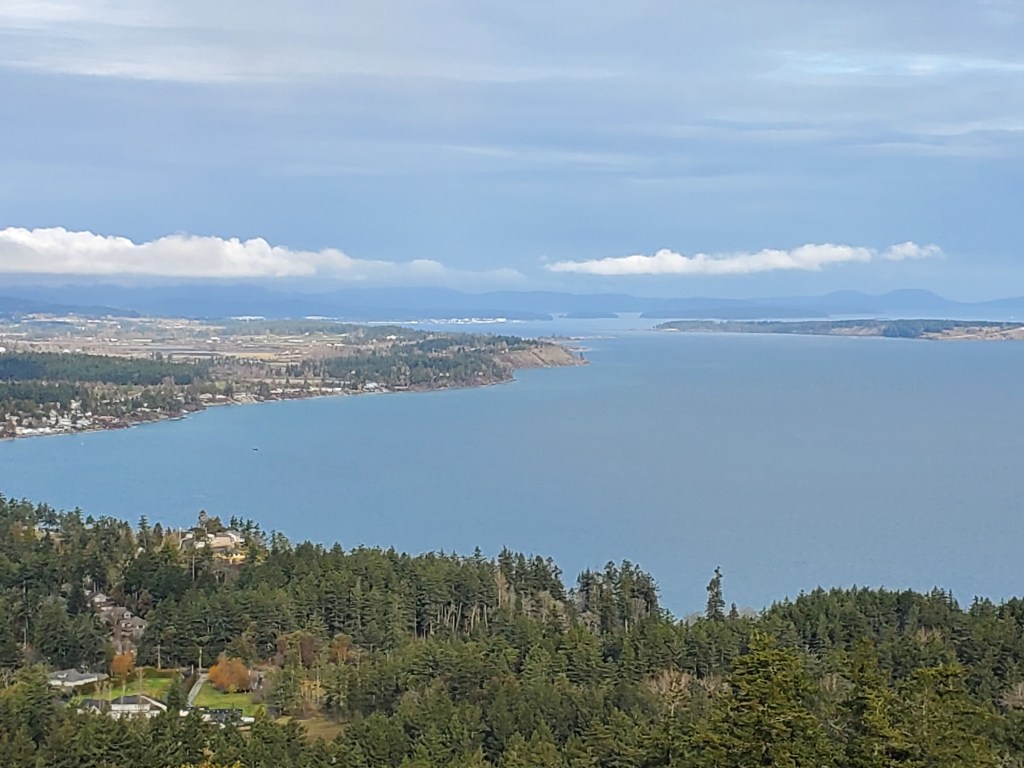
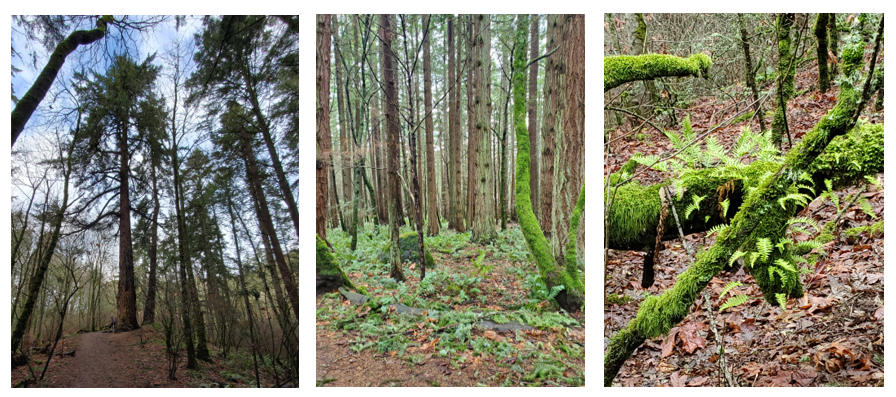


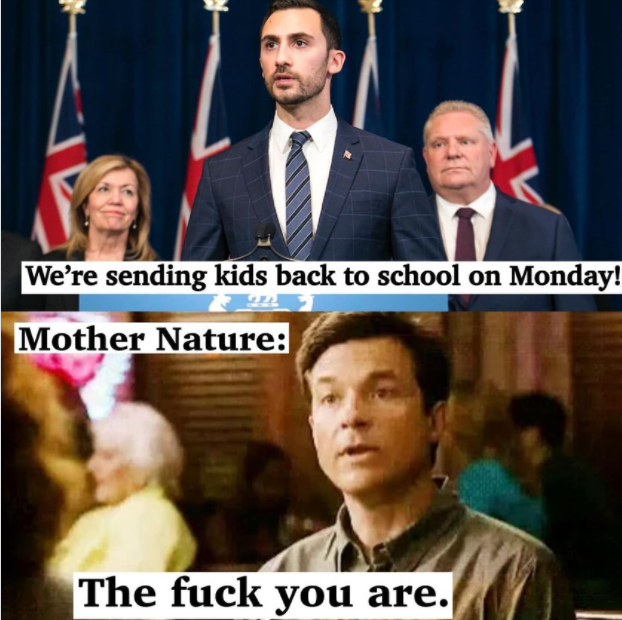
 Out of the Well